



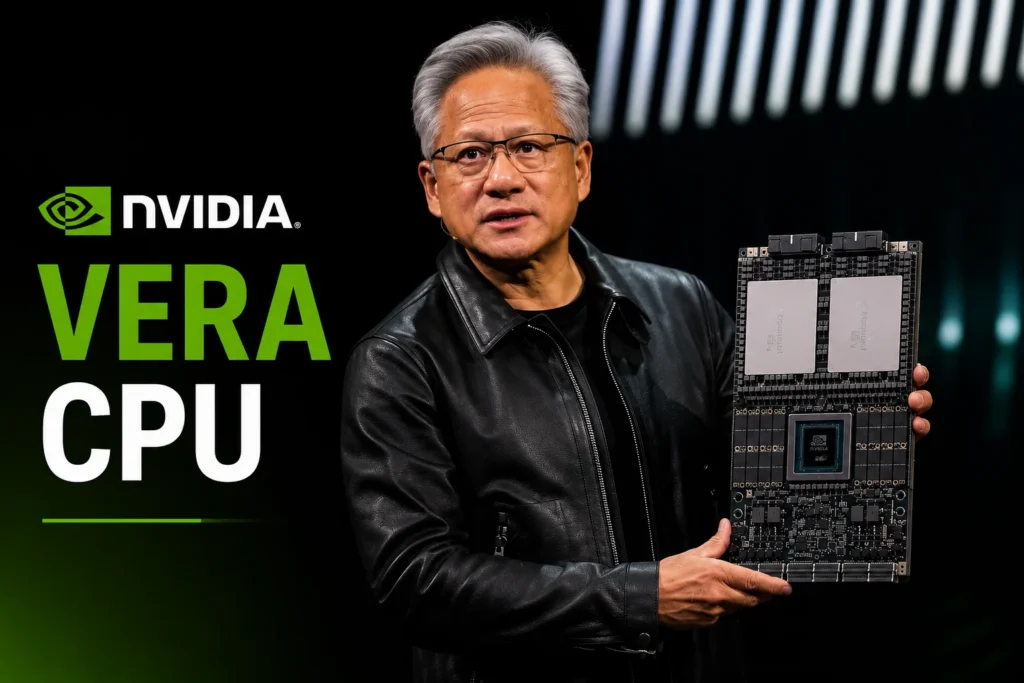
Nvidia is reportedly pitching its new Vera processor to Chinese clients, a move that could reshape how the company competes in the fast-growing AI infrastructure market.
According to a Reuters report, Nvidia has told some Chinese customers that Vera processors for AI data centers may become available as soon as August, with clients able to begin placing orders.
The development comes at a sensitive time for Nvidia’s China business. The company has faced pressure from U.S. export controls on advanced AI chips, while China continues to encourage domestic alternatives in key technology sectors.
For Nvidia, Vera is more than another chip. It represents a broader attempt to expand beyond GPUs and capture a larger role in the AI computing stack.
What Is Nvidia Vera?
Vera is a central processing unit designed for AI data centers and agentic AI workloads. Unlike Nvidia’s better-known GPUs, which are widely used for AI training and acceleration, Vera is intended to support the behind-the-scenes computing that modern AI systems need.
Nvidia has positioned Vera CPU as part of its next-generation AI infrastructure strategy, especially as businesses move from training large AI models to running AI applications at scale.
This matters because AI systems do not depend on GPUs alone. Large AI platforms also need CPUs to manage data movement, system coordination, memory handling, and workload execution.
Key Details at a Glance
Why Nvidia Is Targeting China With Vera
China remains one of the world’s most important technology markets, especially for cloud computing, AI development, and data center expansion.
Nvidia’s advanced AI GPU business in China has been affected by export controls and local regulatory pressure. The new processor may give the company another way to stay relevant with Chinese cloud companies and AI infrastructure buyers.
The reported sales push also shows that Nvidia is not only trying to sell hardware. It is trying to keep Chinese customers connected to its broader AI ecosystem, including chips, software, servers, and infrastructure platforms.
This is important because companies are now looking for full AI infrastructure solutions, not isolated processors.
Why Vera Puts Nvidia Against Intel and AMD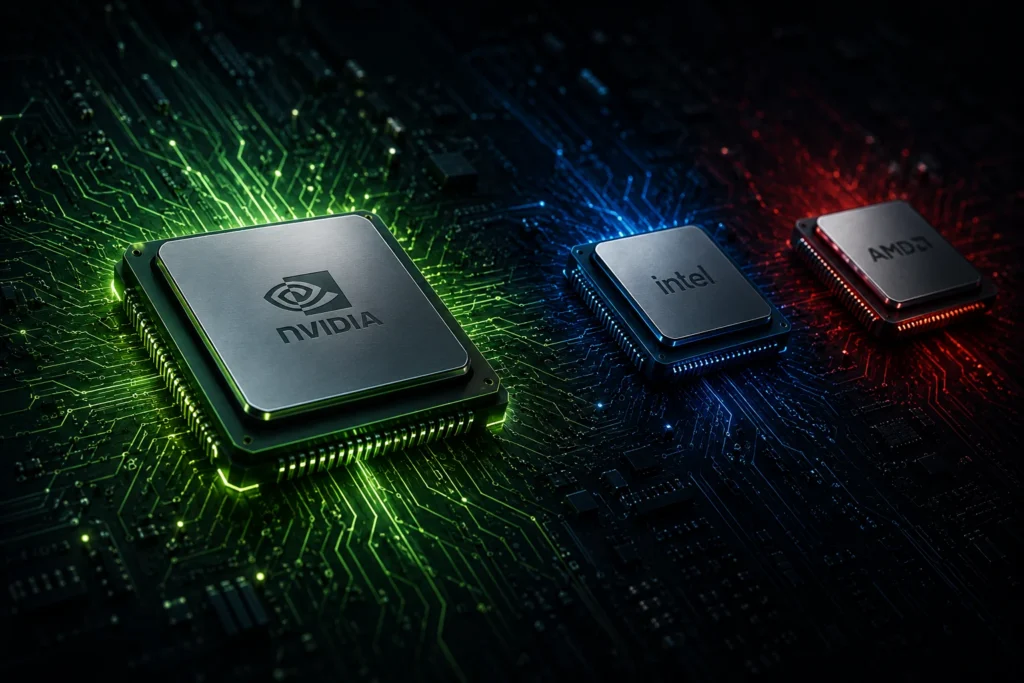
Vera also places Nvidia in more direct competition with Intel and AMD.
Intel and AMD have long dominated the server CPU market. Intel Xeon processors are widely used across enterprise and data center environments, while AMD data center solutions support cloud, enterprise, and AI infrastructure workloads.
With this product, the company is moving deeper into the CPU market, where buying decisions are often tied to reliability, compatibility, software support, and long-term infrastructure planning.
Because the chip is based on Arm technology, Nvidia is taking a different path from Intel and AMD’s traditional x86-based server CPU strength. Arm’s Neoverse platform is also positioned for cloud and AI data center infrastructure.
This makes the competition more strategic. Nvidia is not simply offering another processor. It is building a broader AI computing platform.
AI Infrastructure Competition Landscape
The introduction of Vera highlights how the AI infrastructure market is evolving beyond standalone GPUs. Technology providers are increasingly competing across the full AI stack, including processors, networking, software platforms, and data center infrastructure.
For enterprise buyers, this shift may create more choices when building AI environments. For Nvidia, it represents an opportunity to expand beyond its traditional GPU dominance and strengthen its position in the broader AI computing market.
The AI Market Is Moving Beyond GPUs
The timing of Vera is important.
The global AI market is shifting from model training toward inference. Training is the process of building AI models. Inference is the process of using those models to answer questions, process tasks, and support real-world applications.
As AI adoption grows, companies need infrastructure that can handle daily usage at scale.
That includes:
AI assistants
Customer support automation
Enterprise workflow tools
AI search systems
Software development agents
Data analysis platforms
Business automation systems
This is where CPUs become more important. GPUs remain critical, but CPUs help manage many of the operations required to run AI systems efficiently.
Vera shows how the AI market is moving from single-chip performance toward broader infrastructure planning.
What Is Agentic AI and Why Does Vera Matter?
Agentic AI refers to systems that can perform tasks more independently. These systems may plan actions, use software tools, process information, and complete multi-step workflows with limited human input.
Examples include AI agents that can:
Research information
Draft reports
Handle customer queries
Manage business workflows
Assist developers
Support internal operations
These systems require strong infrastructure because they may need to run multiple actions at the same time. Nvidia is positioning Vera as a processor built for this type of AI environment.
Nvidia has also described Vera in its official announcement as a CPU designed for AI agents, which aligns with the market’s shift toward more autonomous AI workloads.
That makes Vera relevant not only for chip buyers but also for companies planning long-term AI transformation.
Possible Challenges for Nvidia
Early interest does not guarantee large-scale adoption.
Chinese customers may still need to test Vera systems before making major purchases. Adoption could depend on several factors, including software compatibility, workload migration, pricing, regulatory approval, and integration with existing infrastructure.
There is also growing competition from domestic Chinese chip suppliers. Beijing has been encouraging local technology development, especially in areas considered strategically important.
So while Vera may open a new opportunity for Nvidia, it does not remove the challenges the company faces in China.
Why This Matters for the AI Industry
Nvidia’s Vera push shows that the AI hardware race is entering a new phase.
The first phase was heavily focused on GPUs for training large AI models. The next phase is likely to focus on complete AI infrastructure, including CPUs, GPUs, networking, memory, servers, and software ecosystems.
This shift may benefit companies that can offer integrated platforms instead of single-purpose hardware.
For Nvidia, Vera could support its effort to become a larger infrastructure provider. For Intel and AMD, it adds pressure in a market they have historically controlled.
For enterprise buyers, it may create more options, but also more complexity when choosing AI infrastructure.
Businesses should pay close attention because chip decisions today may influence AI deployment costs and performance for years.
What Comes Next for Nvidia Vera
Nvidia’s reported Vera CPU sales push in China is more than a product expansion. It reflects how quickly the AI infrastructure market is moving from GPU-led growth toward broader computing platforms.
As AI demand shifts from model training to real-world deployment, CPUs are becoming more important in the AI stack. Vera gives Nvidia a potential path to compete beyond GPUs while keeping major cloud and data center customers connected to its wider AI ecosystem.
Large-scale adoption in China is still uncertain. Chinese companies may continue testing performance, compatibility, cost, and regulatory factors before making broader commitments. Even so, Vera shows where the market is heading: the AI hardware race is becoming less about one powerful chip and more about the complete platform behind modern artificial intelligence.

