



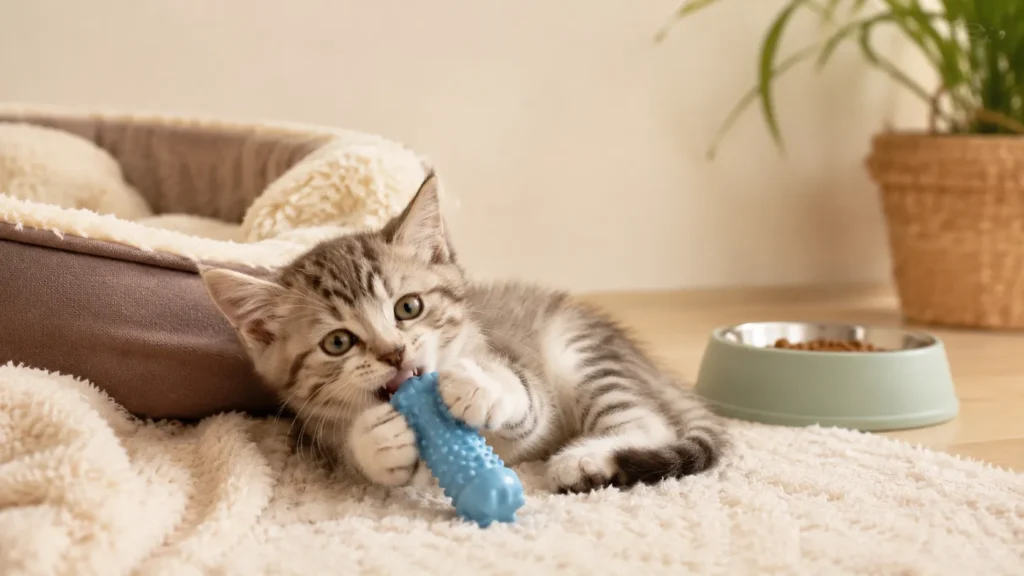
A new kitten is pure joy for about three weeks. They purr on your chest, zoom across the living room, and melt your heart with every tiny meow. Then, almost overnight, the honeymoon phase ends. One morning you find a tiny, needle-like tooth left behind on the carpet, a mysterious damp patch of drool on the couch cushion, and your expensive phone charger chewed completely through. Welcome to the unmistakable, messy start of kitten teething.
While discovering a missing tooth or a ruined cable can be startling, this is a completely normal milestone in your cat’s development. Just like human babies, young felines go through an intense physical transition as their mouths change. The process of kitten teething can be uncomfortable for your pet, occasionally worrying for you, and definitely a bit destructive for your home. However, it becomes much easier to handle once you know exactly what is going on inside that little mouth, how to decode their behavior, and how to safely soothe their sore gums.
Two Sets of Teeth During Kitten Teething
Cats, like people, go through a baby set and an adult set.
The baby teeth (vets call them deciduous teeth) are small, needle-sharp, and don’t have much in the way of roots. Kittens grow 26 of them, just enough to start eating solid food. Because the roots are shallow, these teeth come out without much resistance once the time is right.
The adult teeth are built for the long haul 30 of them in a full-grown cat, including four molars that show up for the first time and were never part of the baby set.
The process is basically a slow handoff: as each adult tooth pushes up from below, it presses against the root of the baby tooth above it. That pressure dissolves the root, the baby tooth loosens, and eventually it falls out often swallowed without the kitten or owner ever noticing. That’s normal and not a cause for concern.
Kitten Teething Timeline
Age | What’s happening | What you’ll notice |
Birth–2 weeks | No teeth yet | Kitten relies on scent and warmth, nurses exclusively |
2–6 weeks | Baby teeth come in | Front teeth first, then the fangs; kitten starts on wet food |
~3 months | Shedding starts | Front baby teeth fall out; chewing on everything begins |
4–6 months | Adult teeth coming in fast | Fangs and side teeth fall out; drooling, red gums, more vocal |
6–7 months | Adult set complete | All 30 permanent teeth in place; biting starts to calm down |
7+ months | Ongoing care | Gums settle to a healthy pink; good time to start brushing |
How to Tell Your Kitten Is Teething
A kitten can’t explain that their gums hurt, so you’ll see it in their behavior instead. Common signs include constant chewing on odd things like table legs, shoes, cardboard, or your fingers. You may also notice more drooling than usual.
Some kittens eat more carefully during this stage. They may chew on one side, drop kibble, or prefer softer food. For feeding-related guidance, you can explore Pet Food & Nutrition.
Easing the Discomfort
Adult teeth pushing through gum tissue genuinely hurts. Never give a kitten human pain relievers Tylenol, Advil, and aspirin are all toxic to cats, sometimes fatally so.
Safer options:
Soften the food. Wet food works well during the rough patches, or soak dry kibble in warm water (or low-sodium, onion-free broth) for about ten minutes until it softens.
Use a cold washcloth. Wet a clean cloth, wring it out, roll it, and freeze it for about an hour. Chewing on something cold takes the edge off sore gums quickly.
Offer the right toys. Soft rubber or fabric chew toys made for cats are ideal. Skip hard plastic, which can shatter into sharp pieces, and skip bones, which can crack an incoming tooth.
Kitten-Proofing the House
A teething kitten treats your whole home like a chew toy, so it’s worth doing a sweep for hazards.
Cords are a big one they look a lot like twigs, so cover them with cable wraps or a bitter-tasting deterrent spray. Houseplants matter too: lilies, pothos, and sago palm are all toxic to cats, and a kitten looking for something to gnaw won’t know the difference. And small items like hair ties, rubber bands, thread, and buttons should stay in drawers, since swallowing anything string-like can cause a serious intestinal blockage.
When to See a Vet
Most kittens get through this stage fine on their own. Occasionally, though, things don’t go quite right.
Retained baby teeth (“shark teeth”) happen when a baby tooth doesn’t fall out even after the adult tooth has already come in beside it, leaving a double row in the same spot. This isn’t just about looks it can push the adult tooth in crooked, poke the roof of the mouth, trap food, and lead to serious gum problems down the road.
Call the vet right away if you notice any of the following:
- Loss of appetite: Your kitten hasn’t eaten anything in a full 24 hours.
- Facial changes: Facial swelling, a lopsided snout, or a hard lump along the jaw.
- Active bleeding: Ongoing bleeding from the mouth (a few small spots on a chew toy is normal, but continuous bleeding is not).
- Pain and aggression: Your kitten reacts with growling, hissing, or fleeing when you touch their face.
- Foul odor: Their breath suddenly turns very foul, which can point to a serious mouth infection.
The Bottom Line
Let’s be honest: kitten teething is messy, loud, and a little bit destructive. But at the end of the day, it’s just a short, necessary phase every little cat has to go through to get a healthy set of adult teeth. Your main job right now is just to be patient. Keep a close eye on their mouth, hide your favorite cords, and remember the warning signs that mean it’s time to call the vet.
When you’re cleaning up drool or finding another chewed-up shoe, this phase can feel like it’s going to last forever. But it passes quicker than you think. Just give them some safe chew toys, soften up their food when their gums look sore, and show them a little extra love. Before you know it, the biting will stop, and you’ll have a happy adult cat with a perfect smile.

