



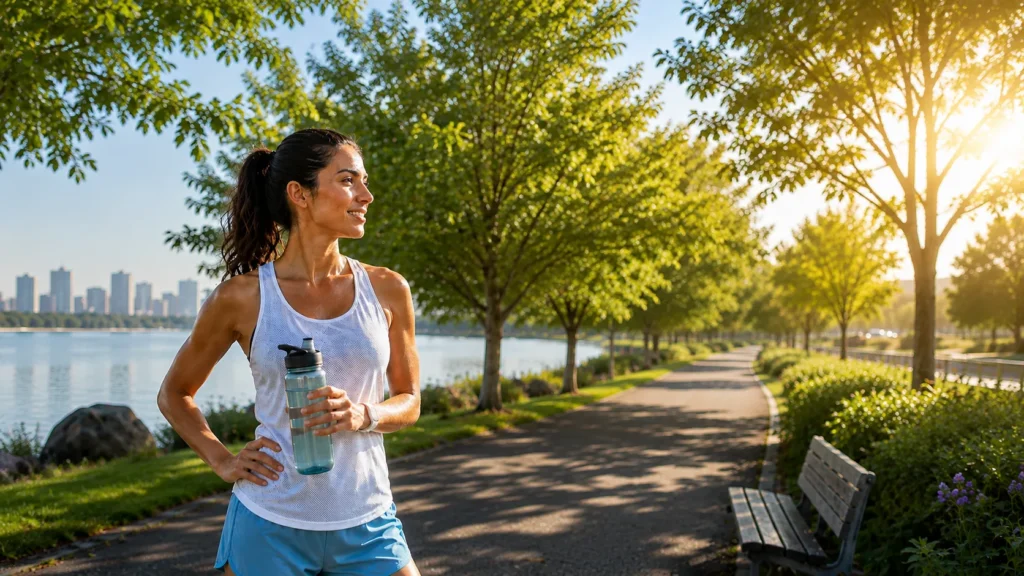
A workout that feels easy in spring can feel completely different once summer arrives. The sun is stronger, the air feels heavier, and even a short walk can leave you sweating more than expected.
You do not have to stop exercising during hot weather, but carrying on with your usual routine is not always a good idea. Your body is already working harder to stay cool, so pushing for the same speed, distance, or intensity can put you under unnecessary strain.
The safest approach is to make a few practical changes. Exercise at a cooler time, drink water before you head out, wear suitable clothing, and be willing to shorten your session when the weather becomes uncomfortable.
Knowing how to exercise safely in hot weather can help you stay active without ignoring the limits of your body.
Quick Safety Points Before You Exercise
Keep these points in mind before starting an outdoor workout:
- Check the temperature and humidity before leaving home.
- Exercise early in the morning whenever possible.
- Avoid the hottest hours of the afternoon.
- Drink water before starting your workout.
- Carry water if you plan to stay outside for long.
- Reduce your normal pace or training time.
- Wear light, loose, and breathable clothing.
- Choose routes with shade and good airflow.
- Take more breaks than you normally would.
- Stop if you feel dizzy, sick, weak, or confused.
- Move your workout indoors during extreme heat.
- Give your body several days to adjust to warmer weather.
These changes may seem small, but they can make a noticeable difference when temperatures are high.
Why Exercise Feels Harder in the Heat
Your muscles produce heat whenever you exercise. To prevent your body temperature from rising too much, your heart sends more blood toward the skin and your body begins to sweat.
Sweat helps cool you when it evaporates. At the same time, your heart still has to supply blood and oxygen to the muscles doing the work.
In hot weather, both jobs become harder. Your heart may beat faster, you may sweat more, and you can lose fluid quickly. This is one reason a familiar running route or cycling session can suddenly feel much more demanding.
You may become tired earlier than usual, even when you are moving at your normal pace. That does not mean your fitness has disappeared. It simply means the conditions are placing extra pressure on your body.
Why Humidity Matters
The temperature shown on a weather app does not tell the whole story. Humidity can make exercise feel far more difficult.
Sweat needs to evaporate to cool the body. When the air is already full of moisture, sweat remains on your skin instead of drying quickly. You may be sweating heavily without getting much relief from the heat.
This is why a humid day can feel uncomfortable even when the temperature does not seem unusually high.
Your surroundings matter as well. A shaded park with a light breeze will usually feel better than an open road surrounded by concrete. Roads, walls, and pavements absorb heat during the day and release it back into the air.
Heat Warning Signs You Should Not Ignore
Do not try to push through unusual symptoms during a summer workout. Mild heat problems can become serious if you continue exercising.
|
Heat Problem |
Common Signs |
What to Do |
|
Heat cramps |
Painful muscle cramps, heavy sweating, thirst, or tiredness |
Stop exercising, rest in the shade, and drink water or an electrolyte drink |
|
Heat fatigue |
Weakness, low energy, a fast heartbeat, or difficulty continuing |
Slow down, move somewhere cool, and rest |
|
Heat exhaustion |
Dizziness, headache, nausea, heavy sweating, pale skin, or unusual weakness |
Stop immediately, move indoors or into shade, cool your body, and drink fluids slowly |
|
Heatstroke |
Confusion, fainting, seizures, vomiting, poor coordination, or loss of consciousness |
Call emergency services immediately and begin cooling the person while waiting for help |
Heatstroke is an emergency. Someone who becomes confused, collapses, or loses consciousness should not be left alone.
Exercise Early When You Can
Early morning is often the best time for an outdoor workout in summer. The temperature is usually lower, the sun is less intense, and roads and buildings have not yet absorbed a full day of heat.
Evening exercise may also be comfortable, but some areas stay warm long after sunset. Asphalt and concrete can continue releasing heat for several hours.
Try to avoid exercising between late morning and mid-afternoon, especially on days when the temperature or humidity is unusually high.
There is nothing wrong with changing your plans and exercising indoors. A home workout, gym session, swim, or indoor walk still counts.
Reduce Your Pace and Workout Time
Hot days are not the right time to chase a personal record.
You may need to run more slowly, lift lighter weights, cycle at an easier pace, or cut your session short. A 30-minute workout may be more sensible than forcing yourself through a full hour.
Longer rest breaks can also help. Find a shaded area, allow your breathing to settle, and continue only when you feel comfortable.
Another option is to split your workout into two shorter sessions. A brief walk in the morning and another later in the day may be easier to manage than one long session.
Even a very short routine can still be useful. Research around five minutes of daily exercise shows that small amounts of regular movement can support long-term health, so shortening your workout in hot weather does not mean it has no value.
Reducing your effort is not a failure. Your body is already using extra energy to control its temperature.
Drink Water Before You Feel Thirsty
Do not wait until the middle of your workout to think about hydration.
Drink water regularly during the day, particularly in the hours before exercise. Start your session well hydrated and take small sips while you are active.
For most short and moderate workouts, water is usually enough. Longer or harder sessions may require electrolytes, especially if you are sweating heavily.
A sensible hydration routine includes:
- Drinking water before exercise
- Carrying a bottle during outdoor sessions
- Taking regular sips instead of drinking a large amount at once
- Replacing fluids after the workout
- Using an electrolyte drink when the workout is long or sweating is heavy
Avoid drinking an excessive amount of plain water in a short period. Drinking too much without replacing sodium can sometimes affect the balance of minerals in the body.
Wear Clothing That Suits the Weather
Heavy, tight clothing can trap heat and make your workout uncomfortable.
Choose loose-fitting clothes made from lightweight, breathable material. Light colours are often more comfortable in direct sunlight because they absorb less heat than darker shades.
A breathable hat can help keep the sun off your face, while sunglasses can protect your eyes.
Sunscreen is also important. Apply a broad-spectrum product before going outside and reapply it when needed, especially if you are sweating heavily.
Let Your Body Adjust Slowly
Your body needs time to become used to exercising in warmer conditions.
Do not begin the first hot week of summer with your hardest workout. Start with shorter, easier sessions and increase the duration gradually.
A light walk, gentle jog, or relaxed bike ride is a better starting point than a long or intense training session.
Even people who regularly exercise outdoors may struggle during a sudden heatwave. When temperatures rise sharply, reduce your effort for a few days and allow your body to adjust again.
Choose a Safer Route
The place where you exercise can affect how hot you feel.
Tree-lined paths, parks, and shaded streets are usually better choices than open roads. Avoid routes where there is no shelter from the sun or nowhere to stop for water.
Carry a phone and tell someone where you are going if you plan to exercise alone.
It is also helpful to choose a route that keeps you close to home, shops, public facilities, or another place where you can cool down if needed.
Who Should Be More Careful?
Some people are naturally more affected by extreme heat than others, making outdoor workouts much riskier for them. This includes older adults whose bodies cannot regulate internal temperature as easily, young children, pregnant women, and anyone who is entirely new to physical exercise and not yet acclimated to the climate. Furthermore, individuals dealing with chronic heart or breathing conditions, such as asthma or cardiovascular disease, must take extra precautions because hot weather puts additional strain on the heart and lungs. Anyone currently recovering from an illness or experiencing dehydration from other factors should also avoid testing their limits in the sun. It is also critical to note that certain everyday medications, including blood pressure drugs, antihistamines, and antidepressants, can actively interfere with your body’s natural ability to sweat or retain necessary fluids. If you belong to any of these high-risk groups, it is highly recommended to get professional advice from a qualified healthcare provider before planning any outdoor summer workouts.
Final Thoughts
Summer exercise does not have to be complicated. The main thing is to pay attention to the conditions and adjust your routine before the heat becomes a problem.
Go out earlier, lower your pace, drink water regularly, wear suitable clothes, and take breaks when you need them.
A shorter workout is still worthwhile. Moving indoors or taking a rest day during extreme heat will not undo your progress.
Your body usually gives warning signs before a heat-related problem becomes serious. Listen to those signs and stop when something does not feel right.

