


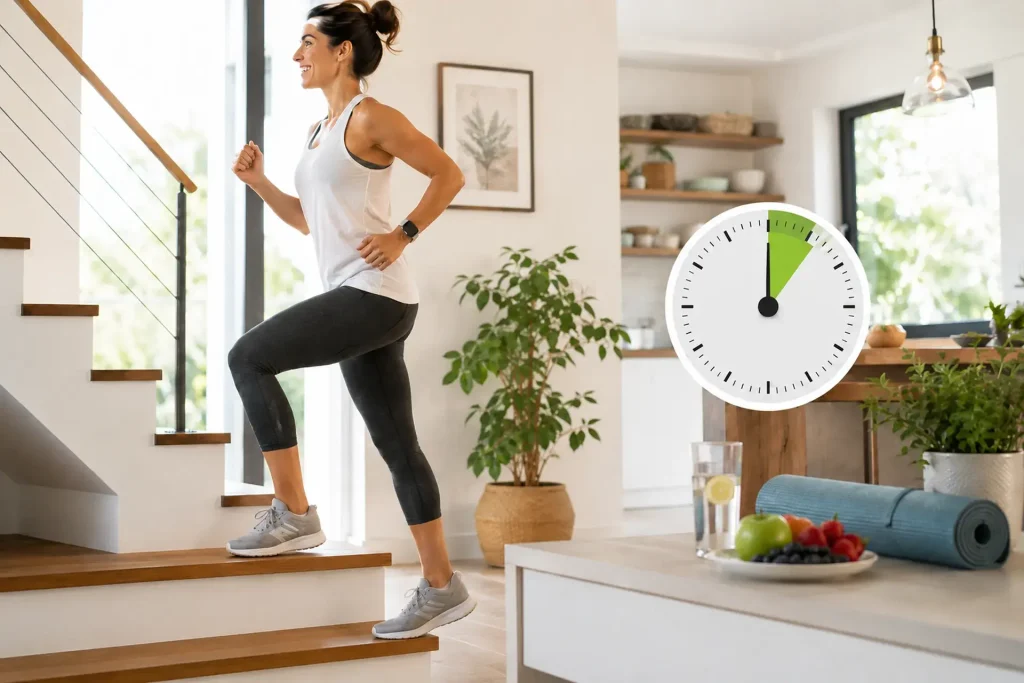
Small changes in daily physical activity can have a powerful impact on long-term health. New research suggests that adding just five minutes of moderate exercise to your daily routine may help reduce the risk of premature death and support a healthier lifestyle.
Even a short burst of movement can make a difference when it becomes a regular habit. Activities such as brisk walking, climbing stairs, stretching, or doing light home exercises can help improve fitness, increase energy levels, and reduce the effects of inactivity.
This shows that improving health does not always require long workout sessions or major lifestyle changes. A few minutes of consistent movement each day can be a simple and effective step toward better overall wellbeing.
Small Daily Movement Can Make a Big Difference
Health experts say that physical activity plays an important role in improving both physical and mental health. Even small amounts of movement during the day can help reduce stress, lower burnout, improve mood, and support overall wellbeing.
Regular movement also helps the body stay stronger as we age. Muscle strength, bone health, physical function, balance, and fitness are all important factors linked with healthier aging and a longer life. When people stay active, they are more likely to maintain better mobility, independence, and energy in later years.
The good news is that exercise does not always have to mean long gym sessions or intense workouts. Simple daily activities, such as walking, taking the stairs, stretching, doing housework, or standing up regularly after sitting for too long, can also make a positive difference.
These small habits may seem minor, but when done consistently, they can build a healthier routine over time. Adding just a few minutes of movement to your day is a simple step that can support better health, reduce inactivity, and help you feel more active and energized.
What the Research Found
The research analyzed data from around 150,000 adults in the UK, US, and Scandinavia. The findings showed that even very small increases in daily physical activity can help lower the risk of early death at a population level.
Experts still recommend following the World Health Organization’s guideline of 150 minutes of moderate-intensity exercise per week. However, the study also shows that people who find it difficult to go to the gym or join a sports club can still benefit by adding more movement to their everyday routine.
Reducing Sitting Time Is Also Important
The study also found that cutting daily sitting time by just 30 minutes was linked to a 7% lower risk of early death. This is important because physical inactivity is strongly connected with chronic diseases, poor fitness, weight gain, and a shorter lifespan.
Many people spend long hours sitting at a desk, watching screens, driving, or resting without much movement. Over time, this sedentary lifestyle can affect heart health, metabolism, blood circulation, muscle strength, and overall energy levels.
The good news is that reducing sitting time does not require a major lifestyle change. Simple habits like standing up after every hour, walking while taking phone calls, stretching during work breaks, or choosing stairs instead of the lift can help increase daily movement.
Even small breaks from sitting can support better health when practiced regularly. By replacing just a little sitting time with light movement, people can reduce inactivity and build a more active routine throughout the day.
What Is Exercise Snacking?
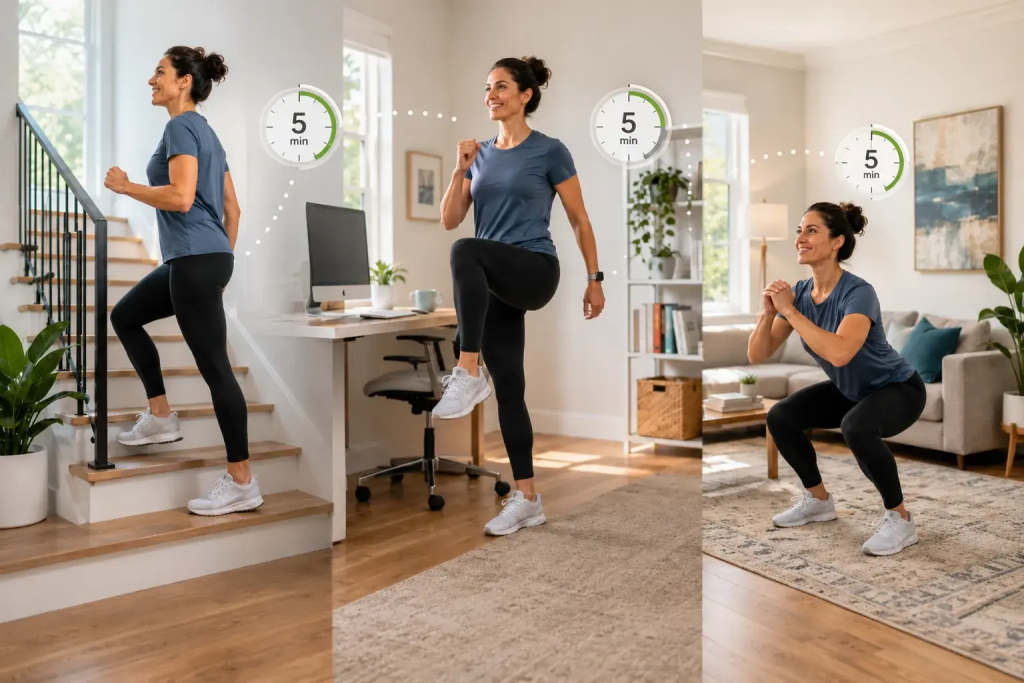
“Exercise snacking” means doing short bursts of physical activity throughout the day instead of one long workout session. These small activity breaks are easier to fit into a busy routine and can still support heart health, metabolism, endurance, and overall wellbeing.
Examples include taking the stairs, walking for a few minutes, dancing at home, doing housework more actively, or running up and down the stairs faster than usual.
Easy Ways to Add More Movement to Your Day
You do not need a major lifestyle change to become more active. Simple daily habits can help you move more and reduce the amount of time you spend sitting. Small actions like taking the stairs instead of the lift, parking a little farther from your destination, walking during short breaks, or standing up regularly can all make a positive difference.
You can also add movement to activities you already do every day. For example, try walking while talking on the phone, stretching for a few minutes after sitting for a long time, doing light exercises while watching TV, or taking a short walk after meals. These small changes are easy to follow and do not require special equipment or a gym membership.
The goal is to make movement a natural part of your routine. When these habits are practiced consistently, they can help improve energy levels, support better fitness, reduce inactivity, and contribute to long-term health. Even a few extra minutes of movement each day can be a simple step toward a healthier lifestyle.
Small Steps Toward Better Health
The key message is simple: even a small amount of movement is better than none. Just five minutes of daily exercise can be a positive first step toward better health, especially when it becomes part of your regular routine. You do not need to start with intense workouts or long exercise sessions to improve your health. Small actions like walking, stretching, climbing stairs, or doing light physical activity at home can help your body stay active and reduce the effects of a sedentary lifestyle.
When done consistently over time, these small steps can support better fitness, improve energy levels, strengthen the body, and contribute to long-term wellbeing. The most important thing is to start slowly, stay consistent, and choose activities that are easy to follow in daily life. In the end, building a healthier lifestyle does not always require big changes. A few extra minutes of movement each day can create a strong foundation for better health and a more active future.
