


Cubans are facing another difficult period as long power cuts and fuel shortages continue to disrupt daily life across the island. At the same time, political tension between Havana and Washington has increased after the United States announced charges against former Cuban leader Raúl Castro.
The case is connected to the 1996 shooting down of two planes linked to a Cuban-American group. Four people were killed in the incident, including three American citizens. The matter remains deeply remembered in both Havana and Miami, and the latest legal action has brought it back into public focus.
Cuba’s current leadership has rejected the accusations, calling them politically motivated and without legal basis. Washington, meanwhile, has taken a harder position toward Havana, describing the island as a security concern and suggesting that the chances of a peaceful agreement are low.
Blackouts Cut Cubans Off From Daily Life
As the political dispute grew, many Cubans were unable to follow the news because of ongoing electricity cuts. In some areas, blackouts have lasted up to 20 hours, leaving homes, streets and apartment blocks without reliable power.
The energy crisis has affected almost every part of daily life. Lifts stop working, water pumps fail, food storage becomes difficult, and communication is often interrupted. Fuel shortages have made the situation worse because the country depends on fuel to keep parts of its power system running.
For many residents, the blackouts are more than an inconvenience. They affect health, safety and basic dignity, especially for elderly people and those living in high-rise buildings.
Elderly Residents Face Serious Challenges
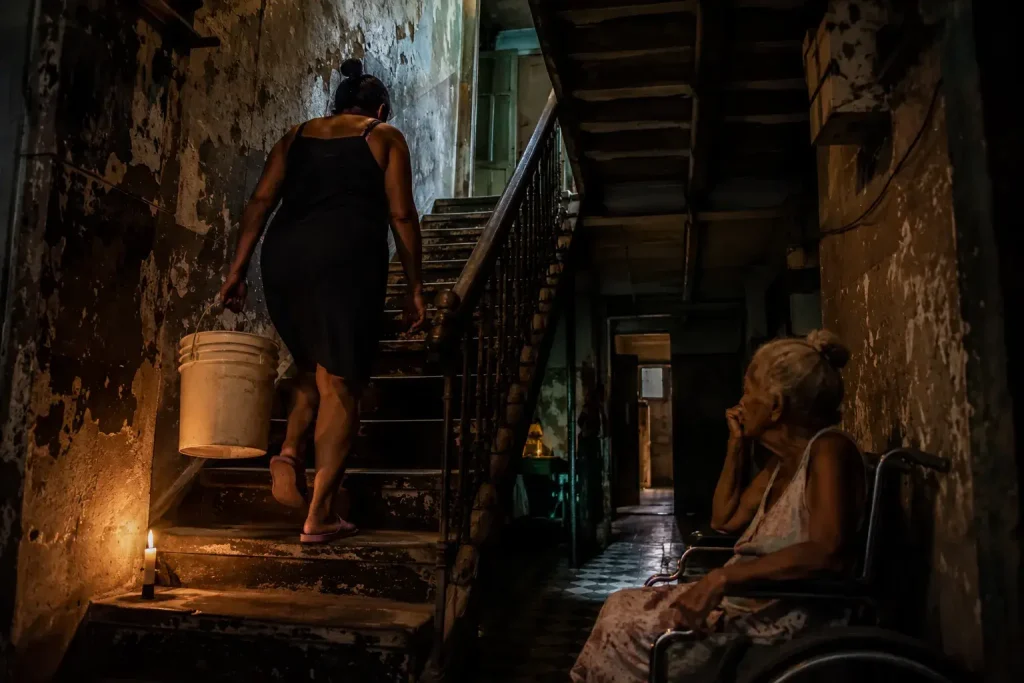
In Havana, residents in tall apartment blocks are among the worst affected. When electricity goes out, lifts do not work and stairwells become dark and unsafe.
One elderly widow living on the 11th floor of a large social housing block described how the crisis has changed her life. After her husband died recently, a blackout in her neighbourhood meant she had to sit with his body for hours before it could be moved.
Now, because the lift often fails, she rarely leaves her apartment. Even a simple trip for food can become risky. If the power cuts out while she is downstairs, she may have to climb eleven flights of stairs with shopping bags.
For older residents, the uncertainty is constant. They do not always know when electricity will return or how long the next outage will last.
Water Shortages Add to the Struggle
The lack of power has also created water problems. In many buildings, electricity is needed to pump water to upper floors. When the power fails, residents on higher levels can be left without running water.
A caretaker in one Havana building has spent months trying to help more than 100 residents manage without reliable electricity. Some elderly residents are bedridden and depend on neighbours to carry water up several floors in the dark.
The situation is also dangerous for people with medical conditions. Several residents in the building reportedly have pacemakers and cannot risk being trapped in a lift during a blackout. Others have already been stuck inside elevators when power suddenly failed.
Local residents hope that solar panels or backup energy systems could provide some relief, especially for the most vulnerable people.
Housing Crisis Continues in Havana
Alongside fuel shortages and blackouts, Havana is also facing a housing shortage. In one neighbourhood, authorities are working on a project to convert old shipping containers into small homes.
The plan is to turn around 40 unused containers into basic two-bedroom houses with kitchens and bathrooms. Some units are nearly finished, while others are still being prepared.
Supporters say the project is a practical way to respond to the capital’s housing needs. They argue that similar construction methods are used in other countries and can provide quick housing in difficult conditions.
However, critics worry that metal homes may become extremely hot during Cuba’s summer. Even so, the project shows how the country is trying to respond to housing pressure while dealing with limited resources.
US Pressure Raises Political Tension
The domestic crisis is unfolding at the same time as Washington increases pressure on Cuba. The United States has called for political and economic changes, though the exact demands remain unclear.
Possible conditions may include leadership change, greater openness to foreign investment and a reduction in Russian or Chinese intelligence activity on the island.
The US pressure campaign has also affected fuel access, adding strain to Cuba’s already fragile energy system. For ordinary Cubans, this pressure is felt through daily hardship: long blackouts, limited transport, unreliable water and growing uncertainty.
Charges Against Raúl Castro Spark Anger
The charges against Raúl Castro have led to strong reactions from government supporters in Cuba. Many see the case as part of a wider political campaign against the country’s leadership.
Some Cubans believe the accusations are selective and unfair. Others worry that the charges could be used to justify stronger action against Havana.
In response, government supporters have planned public demonstrations in defence of Castro. For many, the issue is not only legal but also national and political.
The dispute has revived old tensions between the two countries at a time when Cuba is already struggling internally.
A Country Caught Between Crisis and Pressure
Cuba is now facing several challenges at once. The island is dealing with fuel shortages, long blackouts, housing problems, economic stress and rising pressure from the United States.
For ordinary people, the crisis is measured in everyday struggles. Families wait for electricity to return. Elderly residents avoid leaving their homes. Caretakers carry water through dark stairwells. Workers try to build new housing despite shortages.
A decade ago, relations between Havana and Washington appeared to be improving. Today, that optimism has faded. The mood is more uncertain, shaped by political tension and daily hardship.
For Cuba, the coming months may be important. The country must manage its internal problems while facing pressure from abroad. For many Cubans, the hope is simple: fewer blackouts, more stability and a daily life that feels less difficult.
