



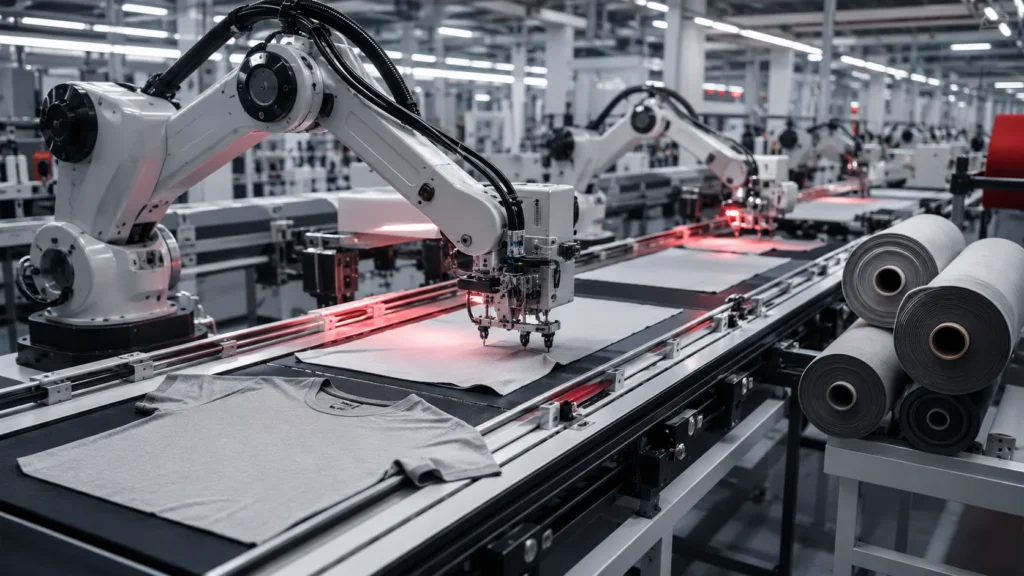
Think about what robots do today. They assemble cars, help doctors with surgery, and move cargo around airports. But if you ask a machine to make a basic t-shirt, things get messy. Fabric isn’t rigid like steel or plastic. It bends, folds, slips, and stretches out of shape the moment you touch it. Because textiles are so unpredictable, the process of robots making t-shirts becomes incredibly difficult since machines just don’t have the fine touch that human hands do.
However, a new group of apparel automation startups wants to change this old way of doing things. Their new automated systems won’t replace human workers overnight. Instead, they are quietly changing how basic clothing items like t-shirts, underwear, and heavy-duty textiles get manufactured.
Why Is Garment Production So Hard for Robots?
Making a shirt seems simple enough, but automating the process is a nightmare for engineers. Unlike a piece of glass or metal, fabric does whatever it wants on a conveyor belt. It wrinkles, slides around, and stretches the second a robotic arm picks it up.
This leaves robot designers with two massive problems:
- Keeping Things Lined Up: To sew a clean seam, a machine has to hold two pieces of fabric perfectly flat and even while moving at high speeds. If the material slips even a tiny bit, the shirt comes out warped and ruined.
- The Human Touch: When you sew, your hands constantly feel the cloth. You know exactly how hard to pull it or when to let go based on how it behaves. Teaching a machine to have that same real-time feel while a needle is punching through the material is incredibly difficult.
CreateMe’s Adhesive-Based Approach to Apparel
A California company called CreateMe decided to stop fighting with the needle and thread altogether. Instead of trying to teach a robot how to sew, they threw out the sewing machine and started using high-tech industrial glue to bond pieces of fabric together.
The automated process is actually pretty straightforward:
[Apply Special Adhesive] ➔ [Precise Robotic Alignment] ➔ [Heat/Pressure Pressing]
CreateMe built custom robots that handle this entire process without making mistakes. Right now, they are using this setup to manufacture women’s underwear. But the company plans to start running automated t-shirt lines very soon before moving into mass production.
Their team says this bonding process works perfectly with cotton, wool, and even leather. Industry experts believe that if this technology can bring just 10% of global t-shirt production back to the US or UK, it will completely flip the fashion supply chain on its head.
Could Clothing Production Return to Western Markets?
For a very long time, fashion brands have kept their factories in Asia. The region offers lower labor costs, massive facility spaces, and a massive network of material suppliers. Because of this, places like the US and UK import almost all of the clothing people buy.
How Automation Drives On-Demand Re-Shoring
| Traditional Offshore Supply | Automated Local Production |
| High shipping & freight costs | Near-zero maritime transit time |
| 3-6 month production lead times | Real-time response to retail trends |
| Massive overproduction risk | Exact-run, on-demand manufacturing |
If these garment-making robots become cheap and reliable enough to run locally, brands can start bringing their factories back home. This means companies can make clothes right next to their customers. It cuts out months of sea shipping and allows stores to make shirts based on what is selling today, rather than guessing what people will want six months in advance.
The Design and Material Benefits of Seamless Garments
People often worry that a glued shirt will just fall apart in the wash. To fix this, these automated factories use specialized thermoset adhesives. Once these bonds cure, they lock at a molecular level. You can throw them in a standard washing machine or hit them with a hot iron, and they won’t budge.
Ditching the thread also brings some cool design benefits:
- Zero Chafing: Without thick interior seams and scratchy threads, clothes sit completely flat against the skin, making them way more comfortable.
- Better Fitting: Machines can bond fabric directly onto 3D shapes that match the human body. This opens up new possibilities for athletic gear and custom-fit clothing lines.
The Core Challenge: Fashion Demands Ultimate Variety
Even with great technology, robots face a major hurdle, and that is human taste. Shoppers do not want a million identical plain white T-shirts. People want different colors, various fabrics, custom prints, and constantly changing fits.
This is where human workers still win easily. A factory worker can change their technique instantly if a fabric starts acting up, or if the factory switches from heavy denim to thin silk in the middle of a shift. Robots cannot do that. They need a highly controlled environment and hours of expensive reprogramming to handle even a minor change in design.
Automated Sewing Innovations: Softwear Automation
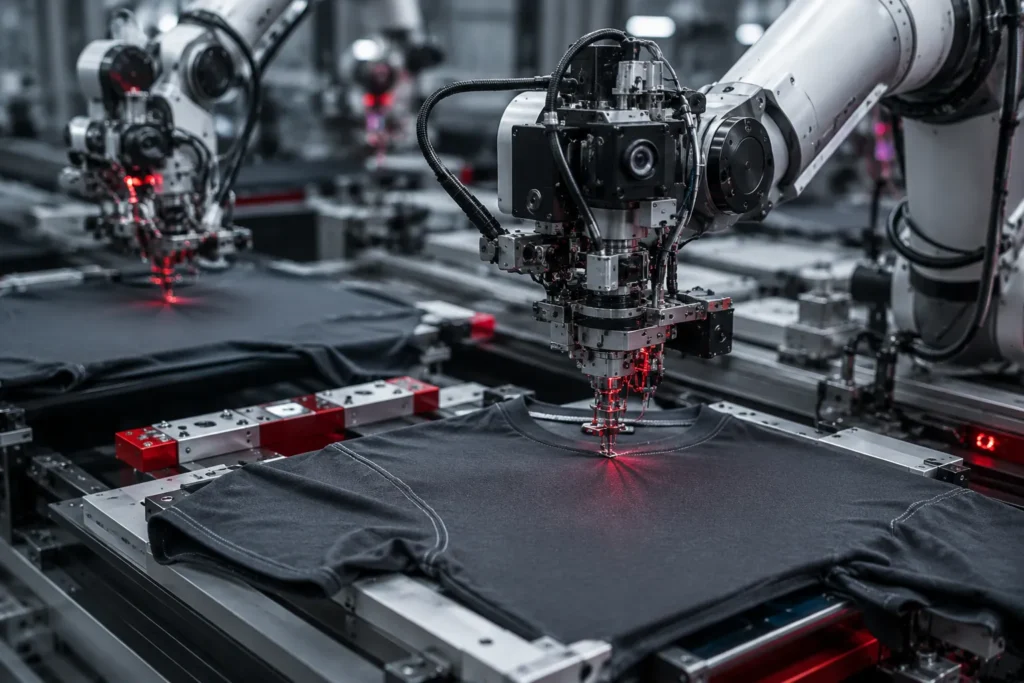
Not every tech company wants to get rid of sewing. Many point out that visible stitching is a huge part of how clothes look. Think about the seams on your favorite jeans or denim jackets.
A company called Softwear Automation, based in Georgia, is working hard to fix the sewing problem. They are building advanced sewing robots that use high-speed cameras to track every single thread count in the fabric as it moves.
Their goal is to make t-shirts locally for the exact same price as cheap imports. Because this is a multi-billion dollar race, the company keeps the exact mechanics of these machines a closely guarded secret.
Environmental and Social Impacts of Automated Apparel
Bringing robots into clothing factories raises serious questions about jobs. Millions of people in developing countries rely on the garment industry to feed their families.
On the other hand, local automation could help reduce waste and support sustainable fashion. The current fast-fashion system produces too much clothing, and unsold stock often ends up in landfills.
.
Advanced Textile Automation Solutions
Robotextile’s Clever Air Grippers
A German firm called Robotextile is focusing on a different part of the problem: how a robotic arm can grab a single piece of limp cloth from a pile without wrinkling it.
They built a gripper that uses a smart air trick. It blows a gentle stream of compressed air across the top of a fabric stack. This creates a quick change in air pressure that lifts just the top layer of cloth into the air, allowing a small mechanical clamp to grab it and move it down the line.
Where This Tech Is Used Today
Because mass-market fashion operates on razor-thin profit margins, these advanced grippers are starting out in expensive technical industries instead:
- Car Airbags: Handling the tough, precise fabrics used for automotive safety.
- Industrial Gear: Assembling heavy-duty storage bags and protective suits.
- Aerospace: Moving carbon-fiber and composite sheets for planes and boats.
Summary: A Future of Working Together
The future of fashion won’t be a world with zero humans or a world with zero robots. Instead, the industry is heading toward a mix of both.
Robots will take over the boring, tiring, and highly repetitive jobs—like cutting out fabric shapes, moving materials around, and printing quick on-demand t-shirt runs. Meanwhile, human tailors and technicians will handle the complicated details, look over the quality, and manage quick design changes. The shirt you have on right now was almost certainly made by human hands, but the next one you buy might be a team effort between an artisan and a machine.

