



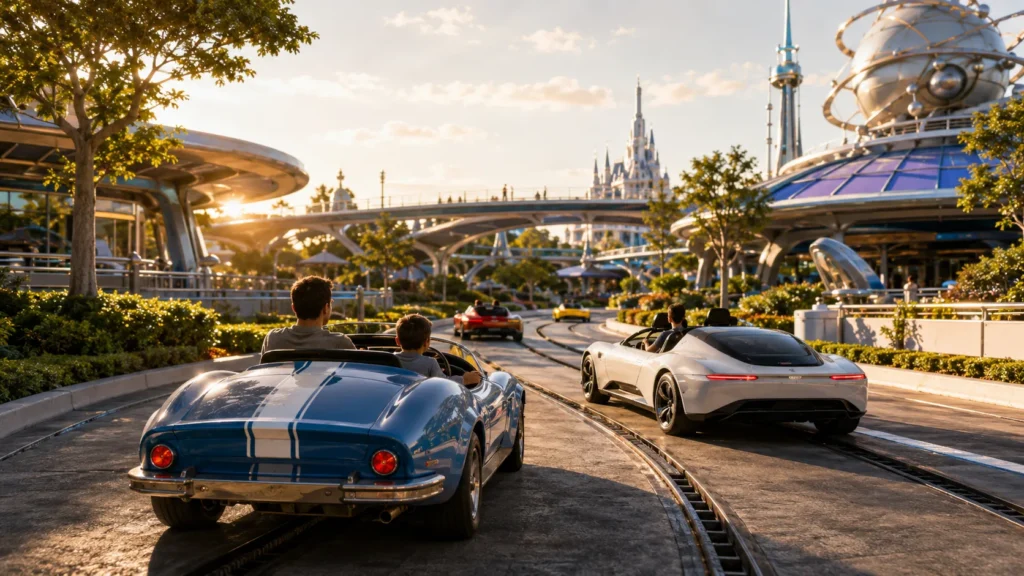
The End of the Gas Era for a Disneyland Classic marks a major turning point for Tomorrowland. The historic landscape of Disneyland’s Autopia is preparing for its most significant mechanical overhaul since opening day, as public enforcement records from state environmental agencies show that Disneyland Autopia gas cars face 2027 deadline regulations requiring the park to remove all internal combustion engines from the attraction by February 1, 2027.
This entire situation comes from a formal settlement reached after an official state site inspection. The California Air Resources Board (CARB) determined that the small, uncertified off road engines running on the track were violating the state air quality laws. Disneyland decided to resolve this administrative issue directly by paying a $56,250 settlement penalty and committing to a clear 30 month plan to phase out the vehicles completely.
For over half a century, this rumbling roadway has been a core memory for young theme park visitors. Millions of kids have jumped into the driver seat to enjoy their very first taste of freedom on the road. But with California pushing incredibly hard against air pollution, this nostalgic highway is finally moving into a clean energy future.
Quick Facts: Disneyland Autopia’s Electric Transition
| Feature | Outgoing Gas Fleet | Incoming Electric Fleet |
| Final Compliance Date | January 31, 2027 | February 1, 2027 (Implementation) |
| Engine Manufacturer | Modified Honda small off road engines | Fully electric battery and motor prototypes |
| Settlement Penalty | $56,250 paid to CARB regulators | $0 (Full compliance milestone) |
| Environmental Profile | Noticeable exhaust fumes and emissions | Zero tailpipe emissions |
| Acoustic Experience | Loud lawnmower-style vibrations | Low noise, smooth acceleration |
Why Disneyland Autopia Gas Cars Face 2027 Deadline Compliance
This specific timeline is a direct result of California targeting small off-road engines (SORE). These strict environmental laws target high-emission utility engines that you usually see in lawn care equipment or recreational vehicles, aiming to keep the air clean in busy public areas.
- Missing Certification Controls: State inspectors found that the Honda engines running the miniature cars did not have the right state-certified emission control setups.
- Administrative Oversight: Disney representatives explained that the issue was mostly paperwork and administrative, meaning they settled it quickly without any actual local ecological damage.
- Corporate Climate Mandates: This upgrade fits perfectly into the Walt Disney Company broad sustainability targets, which aim for net zero greenhouse gas emissions by 2030.
Preserving Tomorrowland: Balancing Nostalgia with Modern Standards
When Autopia first opened with Disneyland back in 1955, it perfectly captured the romance of America’s mid-century highway boom. The ride praised the freedom of driving and offered an optimistic look at what personal travel could become.
But looking at things today, standing in a long line filled with heavy gas fumes and loud engine noise feels totally out of place for an area meant to showcase the future. Industry analysts emphasize that updating this classic track is more than just a legal requirement to fix a state violation; it is a natural step to keep Tomorrowland feeling truly futuristic.
“To accurately represent the future of transportation, Tomorrowland must move away from the fossil fuels of yesterday.”
What the Electric Future Looks Like for Autopia
Disney engineering teams are already hard at work designing and testing brand-new, zero-emission vehicle prototypes. Switching over to a complete electric vehicle (EV) setup will completely change the guest experience for the better:
- Cleaner Air Quality: Getting rid of the tailpipe exhaust means the strong gas smell that has always lingered around the Tomorrowland line will be completely gone.
- Advanced Mechanics: Electric motors offer instant power, making the drive much smoother without the classic rough vibrations of a gas engine.
- Acoustic Upgrades: Quiet electric engines mean parents and kids can talk normally without trying to yell over dozens of small engines running at once.
- Infrastructure Upgrades: Imagineers are currently redesigning the track area to add high-capacity charging setups, new maintenance spaces, and updated safety sensors.
Expected Closures and Timeline for Park Visitors
Since flipping a massive 70-year-old track from old gas lawnmower motors to high-tech electric plug-ins is a total nightmare logistically, expect a long closure before that 2027 cutoff hits. Disney is staying tight-lipped on exact dates or when the construction crews will actually block off the entrance. If you are desperate to smell that classic, toxic exhaust one last time, you better book your park tickets before the final months of 2026 wrap up.
An Industry Wide Shift in Theme Park Sustainability
Seeing that Disneyland Autopia gas cars face 2027 deadline trouble is just a small piece of a massive shift hitting theme parks worldwide. Local governments are choking out gas power with heavy fines, and let’s be real, modern parents do not love standing in a cloud of smog while waiting in line anyway. Swapping out the engines on this original 1955 ride shows that even the most sacred landmarks have to grow up. The true magic never came from a loud, dirty tailpipe; it was always about that awesome feeling of a kid steering a real car for the first time. Going electric just means that core memory stays alive for the next generation without ruining the air.

