



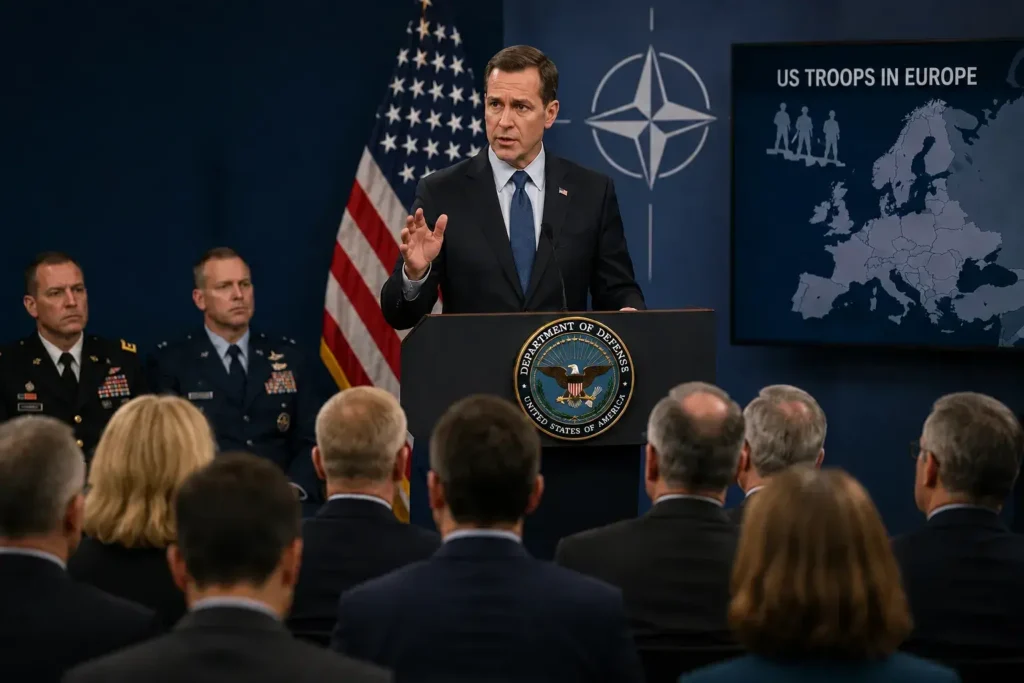
The geopolitical landscape of transatlantic defense is facing a major shift. The United States has officially indicated that a US military presence in Europe under review strategy is now on the table, signaling a potential reduction of American troops stationed across the continent. This development comes as Washington amplifies pressure on its NATO allies to shoulder greater financial and strategic responsibility for their own collective defense.
While a senior US official acknowledged that European capitals are understandably uneasy about these discussions, he emphasized that the direction of American foreign policy should come as no surprise to Brussels or its partners.
Why the US Military Presence in Europe is Under Review
The Euro-Atlantic security alliance—comprising Canada, the US, and 30 European nations—has relied on American military might as its backbone since the Cold War era. Originally established to deter the Soviet Union, these deployments took on renewed urgency following Russia’s full-scale invasion of Ukraine.
However, several deep-rooted friction points have prompted the White House to re-evaluate its commitments:
- The “America First” Doctrine: The current administration is actively seeking to downscale overseas military footprints to align with domestic priorities.
- The Burdensharing Debate: Washington has long criticized Canada and European allies for failing to meet the mandatory NATO defense spending targets.
- The Iran Conflict Disagreements: Tensions spiked significantly after European NATO members declined to back US strategic maneuvers regarding Iran, fueling frustration within the White House.
“NATO must not only be valuable for Europe, but also for the United States. The alliance needs to serve American interests just as much as it serves European security needs.”
— US Secretary of State (speaking during an official visit to Sweden)
Mapping the Current US Military Footprint in Europe
To understand what is at stake, it is vital to look at where American forces are heavily concentrated. Currently, tens of thousands of active-duty personnel are stationed in key strategic hubs across Western and Eastern Europe.
The table below outlines the estimated distribution of the American military presence currently under review:
| Country | Approximate US Troop Strength | Strategic Significance |
| Germany | 36,000+ | Main European hub, hosts Ramstein Air Base. |
| Italy | ~12,000 | Naval and air logistics for the Mediterranean. |
| United Kingdom | ~10,000 | Joint intelligence, cyber security, and air support. |
| Poland | ~10,000 | Critical eastern flank deterrence near Russia/Ukraine borders. |
Increased Budgets and an Uncertain Future for NATO
In response to persistent warnings from Washington, several NATO member states have recently agreed to boost their national military budgets. Yet, for many inside the White House, these adjustments may be “too little, too late” to stop a strategic drawdown. The debate over defense spending has now heavily entered national politics across both the US and Europe, shifting how voters and leaders view international commitments.
With national politics driving defense policies at home, NATO’s Secretary General has openly admitted that Europe’s trajectory toward self-reliance and strategic autonomy—becoming less dependent on the United States—is a reality that is likely to continue.
Key Takeaways for the Future of Transatlantic Defense:
- Vulnerability on the Eastern Flank: Frontline states close to Russia’s borders (like Poland and the Baltics) will monitor any actual troop withdrawals with extreme caution.
- A Shift to Multilateralism: Europe will be forced to develop its own integrated defense manufacturing and rapid-response capabilities as domestic pressure grows.
- Political Gridlock: The debate proves that the future of NATO no longer rests solely on military capability, but on how equitably the financial and political burdens are shared across global and national politics.
As Russia’s war in Ukraine continues to strain global economies, this policy shift marks a critical turning point. Whether these proposed cuts are a negotiation tactic to force higher European spending or a permanent retreat from historic treaties remains to be seen.

