



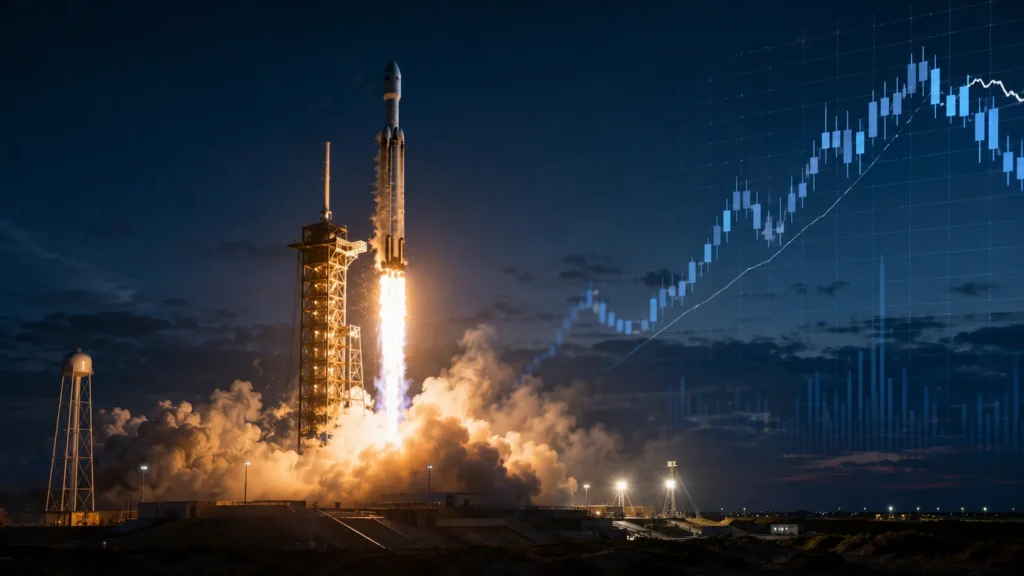
The crazy excitement that triggered the early SpaceX stock rally is finally cooling off. After a wild opening rush that had everyone in the financial world talking, the stock is entering a much quieter phase. The days of non-stop green days driven by pure excitement are pausing, and people are now trying to figure out if the company’s real-world numbers actually back up its massive price tag.
The Initial Rush Fades as Reality Kicks In
History shows that high-profile tech listings often follow this path, making the current SpaceX stock rally cooldown a standard market reaction. In the beginning, everything was working in its favor. You had the massive growth of Starlink internet, huge contracts with the military, and of course, the star power of Elon Musk. Everyone was scrambling to buy into the company from day one, refusing to miss out on the opening surge.
Pure hype can only carry a project so far before reality sets in. Early venture backers and large trading firms have started locking in their profits, selling off some shares after the big jump. This doesn’t mean big investors are abandoning the company or that the business is in trouble. It just means the market is taking a breather to separate social media noise from the actual financial health of the business.
Why the Retail Buying Frenzy Couldn’t Last
Small, everyday investors were the main engine behind that first massive price spike. Thanks to online trading apps and viral discussions on forums, regular people finally got a chance to buy into a company that used to be completely private.
Quick Take: When a stock moves purely on internet hype, it becomes incredibly volatile. As soon as the daily trading volume drops and people move on to the next big thing, the price naturally starts to look for a realistic floor.
Breaking Down the Bright Side vs. The Roadblocks
To understand where the stock goes next, it helps to look at what is pushing the price up versus what is pulling it back down.
Why Investors Are Excited (The Good) | What is Causing the Slowdown (The Risks) |
Starlink Cash Flow: Millions of global users are paying for monthly internet, creating a steady stream of predictable income. | Extreme Price Tag: The stock is priced for absolute perfection, meaning even a small mistake could trigger a big drop. |
Rocket Monopoly: They basically own the market when it comes to launching satellites and sending astronauts into space. | Massive Bills: Building giant rockets and space infrastructure costs an incredible amount of cash every single day. |
Government Backing: Long-term, multi-billion dollar contracts with NASA and defense agencies keep them safe from normal recessions. | Government Regulations: Rules around space debris, environmental impact, and launch schedules can slow down progress. |
Funds Paused for Lower Prices: Large institutional investors are waiting for a market drop to make massive bulk purchases. | Fickle Social Media Trends: If retail traders lose interest or find another trending sector, the buying support disappears. |
What Wall Street Wants to See Next
SpaceX is easily the biggest name in space technology, but the stock market cares about profits, not just cool tech. For the stock to stabilize and start climbing again over the next few months, the company needs to show clear progress on a few basic business fronts:
- Real Profitability: Proving they can keep more cash than they spend on building and testing new rockets.
- Starlink’s True Cost: Showing that the money they make from internet subscribers easily covers the cost of building and replacing old satellites.
- Smooth Management: Proving that running multiple massive tech projects at once won’t lead to operational delays or burnouts.
The Next Moves: What Could Change the Direction?
How the Stock Could Bounce Back
The core business is incredibly strong, so a comeback is always on the table. The rally could easily start up again if the company delivers a couple of stellar quarterly earnings reports, if giant mutual funds start buying up millions of shares, or if Starlink announces a massive new commercial partnership that boosts their revenue expectations.
What Could Drag It Down Further
On the flip side, we have to look at the wider economy. If inflation stays stubborn or the overall stock market takes a hit, high-flying tech stocks are usually the first ones to drop. Plus, space travel is hard—any unexpected technical glitch or delayed launch schedule could make investors anxious about the high valuation.
The Bottom Line
The current slowdown shows that the stock has officially grown up. The honeymoon phase of buying blindly based on headlines is over. From here on out, the stock’s performance isn’t going

